Evaluating the Drimuro Google Slides Template for Professional Presentations
When building a presentation, the foundation you choose significantly impacts the final product. Templates like the Drimuro - Google Slide Template offer a starting point, but understanding its specific characteristics, how it compares to general approaches, and where it excels is crucial for making an informed selection. This analysis examines the template's features, practical applications, and tradeoffs to help you determine if it aligns with your project needs.
What Defines the Drimuro Template
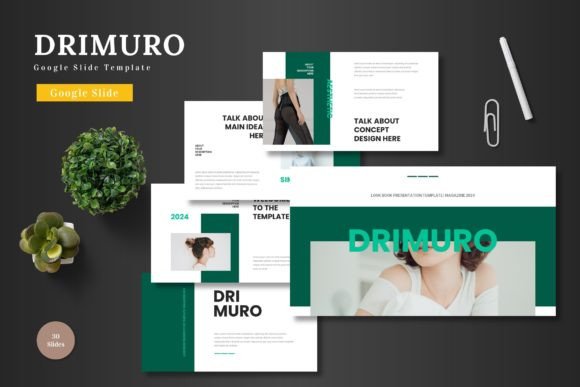
The Drimuro Google Slide Template is a pre-designed set of slides intended for use within Google Slides. Its core proposition is a comprehensive, editable framework designed for multipurpose use. The package includes a substantial number of slides—150 total across five distinct color schemes—alongside specialized sections like galleries, portfolio layouts, and handcrafted infographics. A key distinction is its commitment to operating entirely within the Google Slides ecosystem. All elements, from illustrations to color schemes, are editable using the native tools of Google Slides, eliminating the need for additional graphic software. This approach prioritizes accessibility and streamlined workflow for users familiar with or committed to Google's platform.
Another defining feature is its inclusion of animated slides and pixel-perfect, resizable illustrations. These elements aim to add a dynamic visual layer without requiring advanced animation skills from the user. The template is structured around master slides, which theoretically allows for consistent design changes across the entire presentation by modifying a single source. This can be a significant efficiency gain for maintaining uniformity in fonts, colors, and element placement throughout a lengthy deck.
Comparing Template Approaches: Comprehensive vs. Modular
In the landscape of presentation templates, a primary comparison lies between comprehensive kits like Drimuro and more modular or minimal alternatives. A comprehensive template provides a vast array of slide types, graphics, and color variations out of the box. The benefit is breadth; it can potentially serve for a full pitch deck, product promotion, internal business report, and portfolio without requiring the user to create new slide layouts from scratch. The tradeoff is that such abundance can sometimes feel overwhelming, and users might spend time navigating through many options to find the precise slide they need.
Modular or niche templates, conversely, often focus on a specific style or use case with fewer total slides. They might offer deeper customization within a constrained aesthetic but require more user effort to adapt to different presentation types. The Drimuro Google Slide Template, with its 150 slides and multipurpose label, clearly falls into the comprehensive category. This makes it a candidate for individuals or teams who value having a single, versatile resource for various presentation needs, reducing the time spent searching for or purchasing new templates for each project.
Strengths and Practical Use Cases
The template's strengths become evident in specific scenarios. For users who regularly create presentations for diverse purposes—such as a freelancer handling client pitches, e-commerce showcases, and personal project updates—having a single multipurpose resource can centralize and simplify their workflow. The included infographics and data visualization slides are particularly useful for business or product promotion contexts where conveying metrics and processes clearly is essential.
The emphasis on editing entirely within Google Slides is a significant practical advantage for a defined audience. Teams standardized on Google Workspace, educators using Google Classroom, or individuals who avoid installing standalone desktop software will find this alignment valuable. The drag-and-drop picture placeholder functionality and resizable graphics further support a streamlined process, allowing for quick content swaps without breaking the design layout. For a project requiring a cohesive, colorful, and visually animated presentation developed under time constraints, the Drimuro template provides a considerable head start.
Considering Potential Limitations and Tradeoffs
While the feature set is robust, certain tradeoffs exist. The very scale of the template—5 color variations each with 30 slides—means that achieving a perfectly minimalist or highly unconventional aesthetic might require more manual deletion or overriding of preset designs. Templates inherently carry a stylistic DNA; the “colorful” and “clean” description of Drimuro suggests a particular visual tone. If your brand or project demands a stark, monochromatic, or intensely gritty style, this template might require more fundamental alteration than a simpler, more neutral starting point.
Another consideration is the learning curve associated with master slide-based templates. While master slides are powerful for uniformity, users unfamiliar with how they function in Google Slides might initially struggle to make global changes effectively. The benefit of centralized control comes with the requirement to understand the template's underlying structure. Furthermore, reliance on platform-specific features means that if a need arises to migrate the presentation to another software like PowerPoint or Keynote, the editing fidelity and ease of animation transfer could become a challenge, despite the included PPTX files.
When Drimuro May Be the Right Fit
The Drimuro Google Slide Template appears well-suited for several realistic situations. It is a strong candidate for small businesses or startups that need to produce professional-looking presentations for multiple audiences—investors, customers, partners—without a dedicated graphic designer. The availability of portfolio and gallery slides also makes it a practical option for creative professionals, such as photographers or designers, showcasing their work.
Projects that value visual engagement through animation and infographics, yet lack the time or skill to create these elements custom, will benefit from the included assets. Finally, for any user whose workflow is deeply integrated with Google Slides and who prefers to avoid switching between applications, the template's design philosophy aligns perfectly. It turns Google Slides into a more capable design tool for presentations.
When Another Option Might Be Necessary
Despite its versatility, there are circumstances where a different approach might be preferable. If your presentation needs are exceptionally narrow and repetitive—for example, creating only internal monthly reports with a fixed, simple structure—a less comprehensive, cheaper, or even custom-built template might be more efficient. Similarly, if brand guidelines are extremely strict and require pixel-specific adherence to certain fonts and layouts not present in the template, starting from a company-approved base or from a near-blank slate could be necessary.
Users who prioritize advanced, custom animations or complex vector graphic manipulation might find the built-in tools of Google Slides, even with a good template, limiting compared to dedicated animation software or PowerPoint's more robust animation pane. In those cases, a template serving as a visual guide rather than a full production asset might be a better fit. The decision often hinges on whether you need the template to do most of the design work or merely to inspire and structure your own design work.
Making an Informed Decision
Choosing a presentation template is rarely about finding the objectively “best” one, but about finding the best match for your specific requirements, skills, and constraints. Evaluating the Drimuro Google Slide Template involves weighing its comprehensive nature against the need for stylistic specificity, its Google Slides-native convenience against potential platform lock-in, and its rich asset library against the potential for over-complexity.
Consider your typical presentation length, audience, and the frequency of your design needs. Assess your comfort level with Google Slides' editing tools, particularly master slides. Finally, compare the visual style of the template's samples with your brand identity or project tone. By focusing on these practical factors, you can move beyond marketing features and determine if this template serves as a helpful accelerator for your work or if a more focused, flexible, or platform-agnostic alternative would yield a better final result and a smoother creative process.